
All Ghana Festivals in October
Ghana Festival Calendar · Month 10 of 12
October Festivals in Ghana
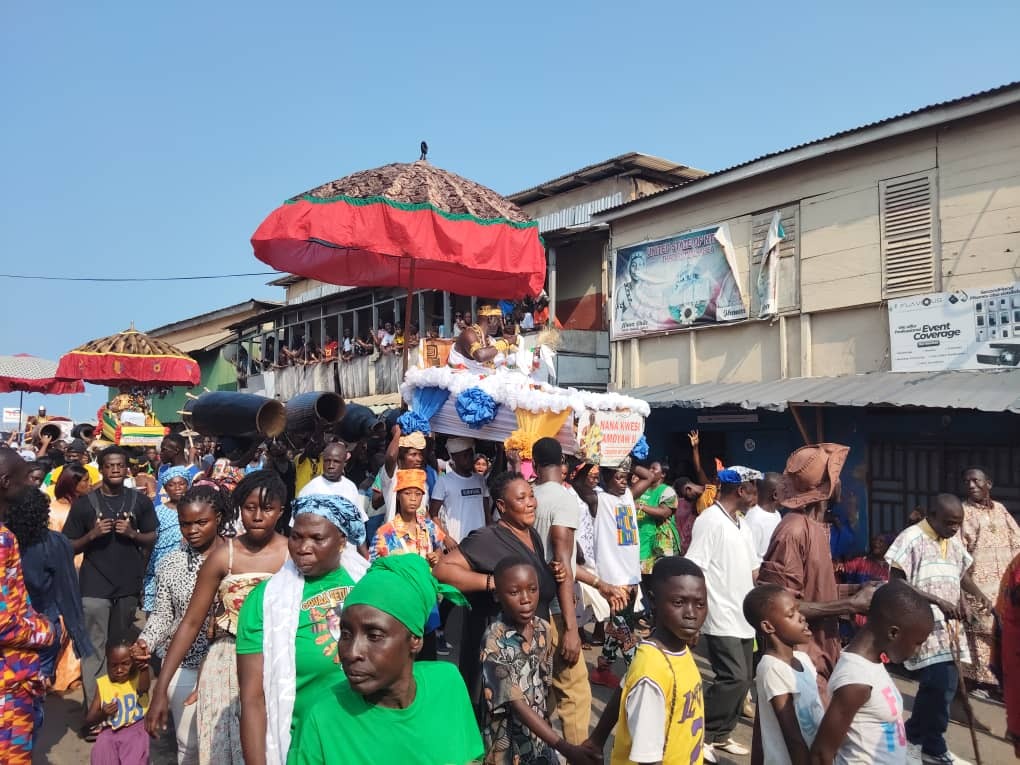
Harvest month. The millet and the yams come in, the rains ease off, and one festival this month does something almost no other society permits: for its duration, ordinary people may publicly criticise their chiefs, out loud, without consequence.
Before you book flights
Almost no Ghanaian festival has a fixed Gregorian date. Most follow traditional calendars, lunar cycles or a decision taken by the traditional council a few weeks beforehand. October is a particularly variable month — several of these festivals run across a period rather than on a day, and two of them have moved substantially between years.
Never book a non-refundable flight around a festival date you found online — including on this page. Confirm with the traditional council, the district assembly or a local contact first.
-
Ngmayem — the Festival of Harvest
The Manya Krobo celebrate the millet harvest, and October is the main event. Millet is what kept the Krobo alive on their mountain, and this is a thanksgiving to the crop and the ancestors who grew it. Expect a grand durbar, dancing, and the beadwork the Krobo are famous for — worn, not sold to visitors.
-
Apoo — the Festival of Cleansing
The most remarkable festival in the Ghanaian calendar, and the least understood by outsiders. For its duration, the ordinary rules of deference are suspended: people may openly criticise chiefs, elders and each other in song, in public, without consequence. A society with a formal annual valve for grievance. Wenchi and Techiman hold Apoo at different times — confirm which and when before you travel.
-
Fofie — the Sacred Harvest of Yams
Nchiraa marks the yam harvest with drumming, dancing, feasting and a durbar of chiefs. The name refers to the sacred Friday of the Akan calendar, which is why this one has an unusually dependable anchor — the first Friday of the month. New yam may not be eaten before the rites are performed.
-
Kundum — the Festival of Harvest
Kundum does not happen on one date in one place. It moves along the western coast town by town over several weeks, so somewhere is always celebrating between August and October. Drumming, dancing and night-long celebration. Ask which town is hosting the week you are there — that question, put locally, is the whole trick to catching it.
-
Akwasidae — Honouring the Ancestors
The one festival you can almost always catch. Akwasidae runs on the Akan 42-day calendar, so it lands in every month of the year — the Asantehene in full regalia at Manhyia, drumming, and the court of a kingdom that never stopped functioning. If your dates are fixed and you want one great festival, aim for this.
Why so many harvest festivals, and why they matter
Three of this month's festivals are harvest thanksgivings, and they share a rule that visitors often miss: the new crop may not be eaten until the rites have been performed. Millet for the Krobo, yam for the Bono, the first fruits along the western coast — the festival is not a celebration that follows the harvest, it is the permission that releases it.
That is why the dates move. They follow the crop and the traditional calendar, not a diary. And it is why these occasions are treated seriously by the communities holding them, however festive they look from outside.
Attending a festival respectfully
These are ceremonies, not shows
Durbars, purification rites and ancestral observances are religious and political occasions that happen to be public. You are a guest at something that would take place whether or not you came. Behave accordingly.
Ask before photographing
Always, and especially where chiefs, priests, shrines or ritual objects are involved. Some moments are not to be photographed at all. Accept a refusal without negotiating, and never use a drone without explicit permission.
Dress and conduct
Cover shoulders and knees. Remove hats in the presence of a chief. Do not step in front of a procession for a photograph. If you are formally received, a small gift is customary — ask locally what is appropriate rather than guessing.
Go with someone local
A local contact or guide turns a spectacle you watch into an occasion you understand — who is who, what is happening, when to stand. It is also how you avoid causing offence without realising it.
Organising a festival? Send us the dates and we will list it free of charge. This calendar is only as accurate as the information communities send us, and we would rather have it from you than from last year's news article. Get in touch.
 There's so much more to discover on Ghana Net! As the oldest dedicated portal for the latest tourism and heritage information (operating since December 2000), Ghana Net is also the largest online network focused on Ghana. It has long surpassed any official Ghana tourism website and other tourism platforms dedicated to Ghana.