
All Ghana Festivals in July
Ghana Festival Calendar · Month 7 of 12
July Festivals in Ghana
Elmina opens its lagoon, Ada's warriors fire their muskets, and every second year the diaspora comes to Cape Coast for PANAFEST. If your reason for visiting Ghana is the return journey, this is your month.
Before you book flights
Almost no Ghanaian festival has a fixed Gregorian date. Most follow traditional calendars, lunar cycles or a decision taken by the traditional council a few weeks beforehand. Bakatue is the most dependable here — traditionally the first Tuesday of July. PANAFEST is biennial, so check whether this is a festival year at all before planning around it.
Never book a non-refundable flight around a festival date you found online — including on this page. Confirm with the traditional council, the organisers or a local contact first.
-
Bakatue — When the Sea Opens
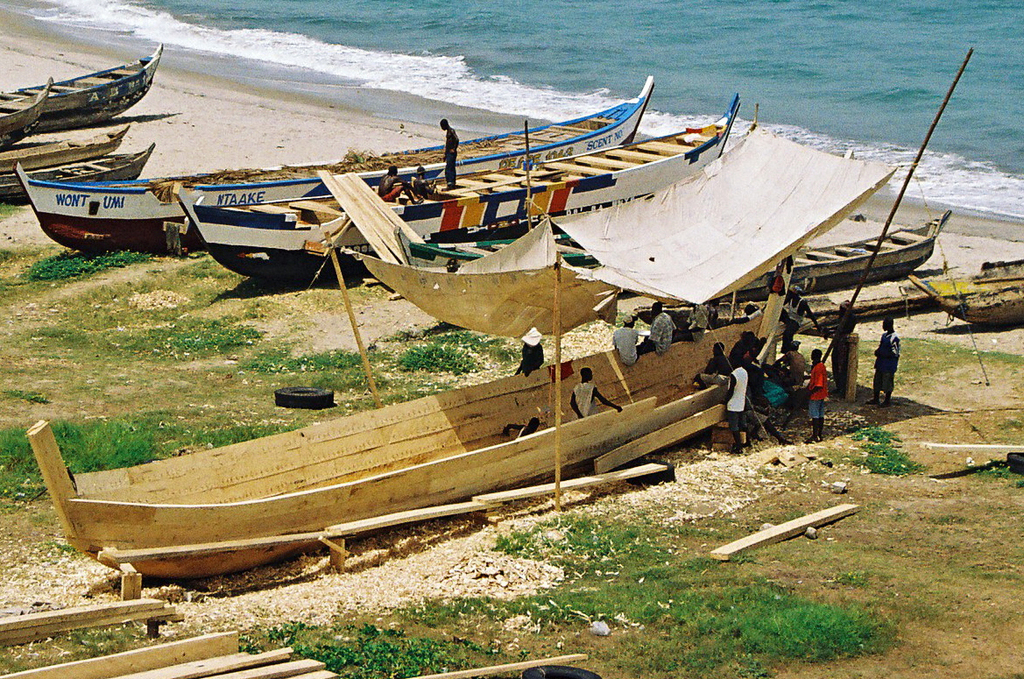
The name means the opening of the lagoon. The Benya lagoon is closed to fishing for a period, then formally reopened with rites, a net cast by the chief fisherman, and a regatta of canoes in full paint. A conservation practice several centuries older than the word conservation — the closed season lets the fish spawn, and the festival is what releases it.
-
PANAFEST — a Pilgrimage of Return
The Pan-African Historical Theatre Festival: performance, colloquia, and the Emancipation Day observances that bring the diaspora to the castles at Cape Coast and Elmina. The centrepiece is not a concert — it is the candlelit vigil and the procession through the Door of No Return. Held every two years, so confirm this is a festival year before booking.
-
Asafotufiam — Marching Through Memory
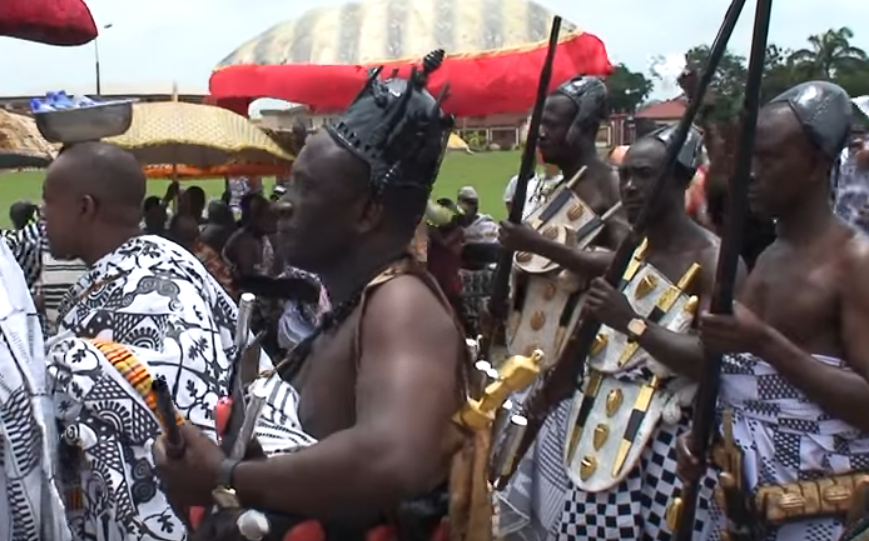
The Ada warrior festival, straddling the end of July and the start of August. The asafo companies reenact the battles their ancestors fought, in full military regalia, firing genuine black-powder muskets at close quarters. It doubles as the occasion when young men are formally presented as ready to defend the community.
-
Akwasidae — Honouring the Ancestors
The one festival you can almost always catch. Akwasidae runs on the Akan 42-day calendar, so it lands in every month of the year — the Asantehene in full regalia at Manhyia, drumming, and the court of a kingdom that never stopped functioning. If your dates are fixed and you want one great festival, aim for this.
July, August and the journey of return
For visitors from the diaspora, July into early August is the significant window. Ghana marks Emancipation Day on 1 August, commemorating the abolition of slavery in the British colonies in 1834 — the first African country to observe it — and in PANAFEST years the two run together into a single sequence of events at Cape Coast and Elmina.
Be prepared for what that involves. The vigil in the dungeons and the walk through the Door of No Return are not sightseeing. People weep. People need to sit down. If you are coming for this, allow days rather than hours, do not pack the rest of the trip tightly around it, and consider going with others rather than alone.
One practical note that matters: Cape Coast and Elmina accommodation fills for Emancipation and PANAFEST and prices rise accordingly. Book early, or base yourself further along the coast at Anomabo or Biriwa and drive in.
Attending a festival respectfully
These are ceremonies, not shows
Durbars, purification rites and ancestral observances are religious and political occasions that happen to be public. You are a guest at something that would take place whether or not you came. Behave accordingly.
At the castles, put the camera down
During Emancipation and PANAFEST observances, people around you are having a profound personal experience. Photographing strangers grieving is not documentation, it is intrusion. Ask, or do not take the picture.
Muskets are real
At Asafotufiam the asafo companies fire genuine black-powder muskets at close range. Stand where your hosts tell you to stand, keep well back from the firing lines, and keep children away entirely. Ear protection is not a bad idea.
Go with someone local
A local contact or guide turns a spectacle you watch into an occasion you understand — who is who, what is happening, when to stand. It is also how you avoid causing offence without realising it.
Organising a festival? Send us the dates and we will list it free of charge. This calendar is only as accurate as the information communities send us, and we would rather have it from you than from last year's news article. Get in touch.
 There's so much more to discover on Ghana Net! As the oldest dedicated portal for the latest tourism and heritage information (operating since December 2000), Ghana Net is also the largest online network focused on Ghana. It has long surpassed any official Ghana tourism website and other tourism platforms dedicated to Ghana.