
All Ghana Festivals in August
Ghana Festival Calendar · Month 8 of 12
August Festivals in Ghana
Accra's own month. Homowo means "hooting at hunger" — a festival that mocks a famine the Ga survived centuries ago, and still celebrates by throwing food on the ground. If you are in the capital in August, you will not miss it.
Before you book flights
Almost no Ghanaian festival has a fixed Gregorian date. Most follow traditional calendars, lunar cycles or a decision taken by the traditional council a few weeks beforehand. Homowo is a particular case: the Ga towns do not all celebrate on the same day, and the dates are announced by the traditional authorities each year.
Never book a non-refundable flight around a festival date you found online — including on this page. Confirm with the traditional council, the district assembly or a local contact first.
-
Homowo — the Festival That Laughed
The name means hooting at hunger. The Ga survived a famine, and every year since they have jeered at it. A ban on drumming and noise precedes the festival; then the chiefs sprinkle kpokpoi — palm-soup and cornmeal — through the streets for the ancestors, families reunite, and the twins are honoured in their own ceremony. Ga Mashie, Teshie, Nungua, La and Osu each hold their own.
-
Asafotufiam — Marching Through Memory
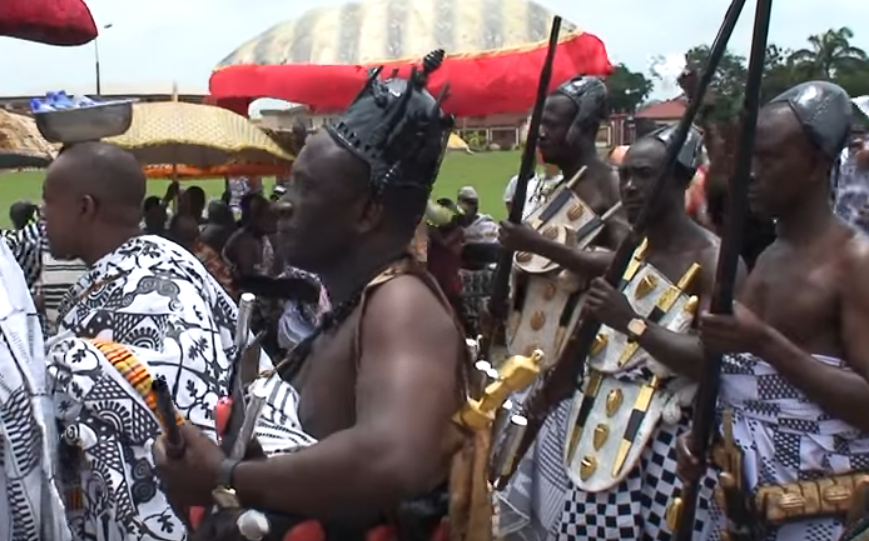
The Ada warrior festival, and one of the most visually striking in the country. The asafo companies reenact the battles their ancestors fought, in full military regalia, with muskets fired at close quarters. It doubles as the occasion when young men are formally presented as ready to defend the community.
-
Akwambo — the Sacred Path of Memory
The path-clearing festival. Communities cut and clear the routes to their farms, shrines and water sources — genuine physical work, done together, before the celebration begins. A festival built on the idea that the way to your ancestors and the way to your food are the same road, and both need maintaining.
-
Kundum — the Festival of Harvest
Kundum begins on the western coast in August and rolls town by town over several weeks, so somewhere is always celebrating through to October. Drumming, dancing and night-long celebration. Ask which town is hosting the week you are there — that question, put locally, is the whole trick to catching it.
-
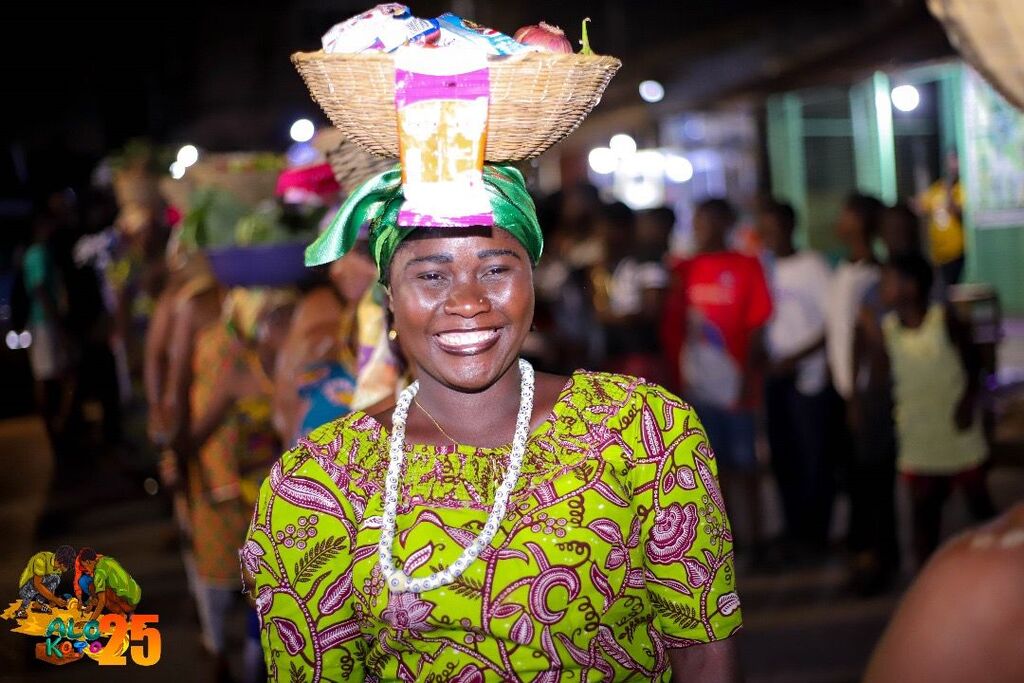
Gbawe Alokoto Street Art Festival
Not a traditional festival, and that is the point. Murals, live painting, music and performance turning a Greater Accra neighbourhood into an open gallery. Proof that Ghana's festival calendar is still being written — and the easiest entry point for anyone who finds durbars intimidating.
-
Akwasidae — Honouring the Ancestors
The one festival you can almost always catch. Akwasidae runs on the Akan 42-day calendar, so it lands in every month of the year — the Asantehene in full regalia at Manhyia, drumming, and the court of a kingdom that never stopped functioning. If your dates are fixed and you want one great festival, aim for this.

The ban on drumming — and why visitors get it wrong
In the weeks before Homowo, the Ga traditional authorities impose a ban on drumming and noise-making across parts of Accra. It is a sacred quiet period, observed so that the crops and the ancestors are not disturbed before the harvest is released.
It is also, most years, the subject of a public argument between traditional authorities and churches whose services fall inside the ban. That tension is real, occasionally reaches the courts, and is worth understanding rather than taking a side on — it is one of the clearest places where customary authority and modern religious practice rub against each other in Ghana.
For a visitor, the practical point is simple: if you are in Accra during the ban, respect it. No amplified music, no drumming, and do not treat it as a curiosity to test.
Attending a festival respectfully
These are ceremonies, not shows
Durbars, purification rites and ancestral observances are religious and political occasions that happen to be public. You are a guest at something that would take place whether or not you came. Behave accordingly.
Ask before photographing
Always, and especially where chiefs, priests, shrines or ritual objects are involved. Some moments are not to be photographed at all. Accept a refusal without negotiating, and never use a drone without explicit permission.
Muskets are real
At Asafotufiam the asafo companies fire genuine black-powder muskets at close range. Stand where your hosts tell you to stand, keep well back from the firing lines, and keep children away entirely. Ear protection is not a bad idea.
Go with someone local
A local contact or guide turns a spectacle you watch into an occasion you understand — who is who, what is happening, when to stand. It is also how you avoid causing offence without realising it.
Organising a festival? Send us the dates and we will list it free of charge. This calendar is only as accurate as the information communities send us, and we would rather have it from you than from last year's news article. Get in touch.
 There's so much more to discover on Ghana Net! As the oldest dedicated portal for the latest tourism and heritage information (operating since December 2000), Ghana Net is also the largest online network focused on Ghana. It has long surpassed any official Ghana tourism website and other tourism platforms dedicated to Ghana.