
Searching for Amo: A 13‑Hour Journey Through Germany to Rediscover Africa’s First European Philosopher
Introduction
Remo Kurka - Most people in Germany have never heard the name Anton Wilhelm Amo, even though he was the first African known to teach philosophy at a European university. And almost nobody knows that before Amo, another West African — Franciscus Africanus from Guinea — lived and studied in German academic circles in the late 1600s.
This is the story of my own journey across Germany — Berlin, Wittenberg, Halle — to find the traces of Amo’s life. A journey that took 13 hours, several unexpected detours, and countless conversations with people who had never heard of the man whose name now appears on street signs and U‑Bahn stations.
It became more than a trip. It became a reminder of how easily history forgets those who challenged it.
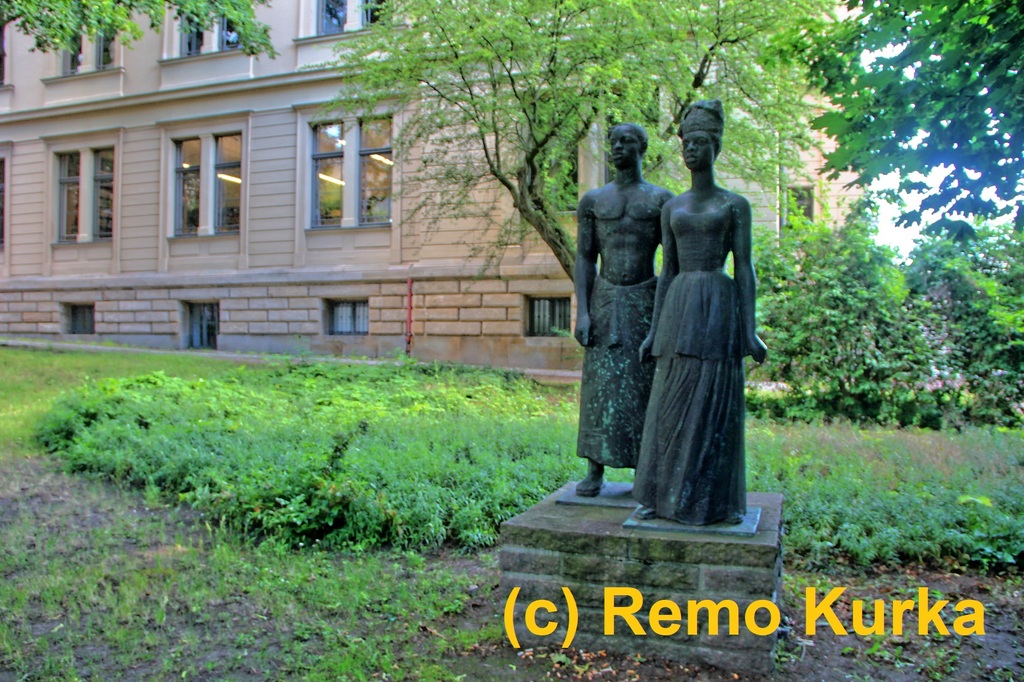
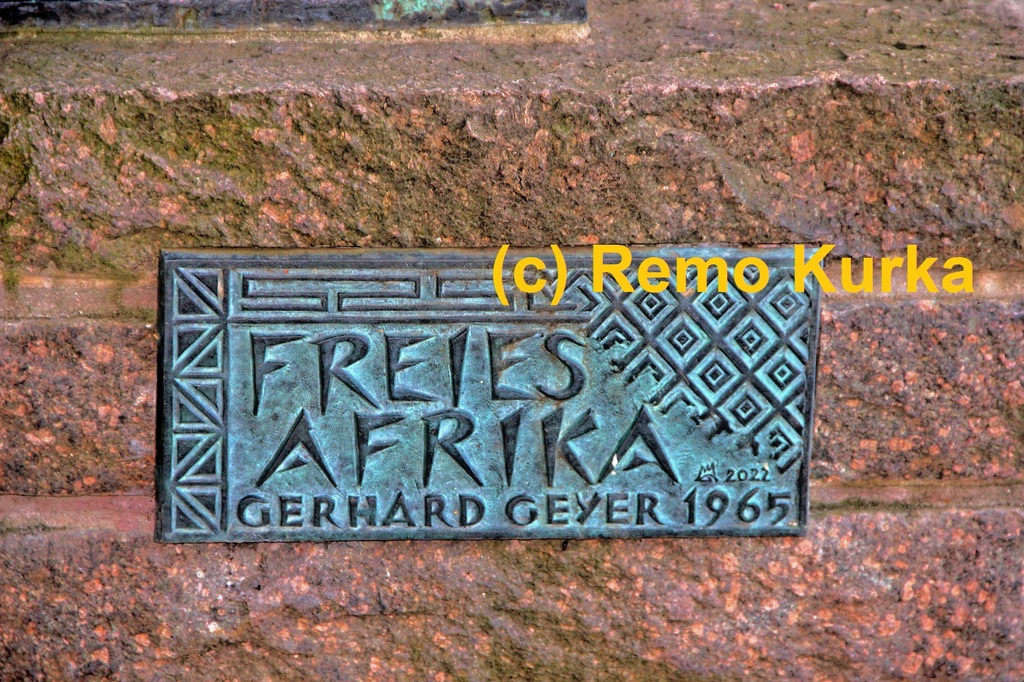
The "Free Africa" and (indirectly) Anton Wilhelm Amo memorial, created 1965, Halle University, Germany
Berlin: The U‑Bahn Station That Knows His Name — But Few People Do
My journey began in Berlin, at the newly renamed U‑Bahn station Anton‑Wilhelm‑Amo‑Straße (formerly Mohrenstraße). I went there deliberately — to photograph the signs, to feel the atmosphere, to see how Germany remembers him.
What I found was telling:
Many Berliners still call it Mohrenstraße.
Some didn’t know the station had been renamed.
Others had no idea who Amo was.
A few thought it was “some political thing”.
The signs were new. The memory was not.
Amo is visible — but invisible.
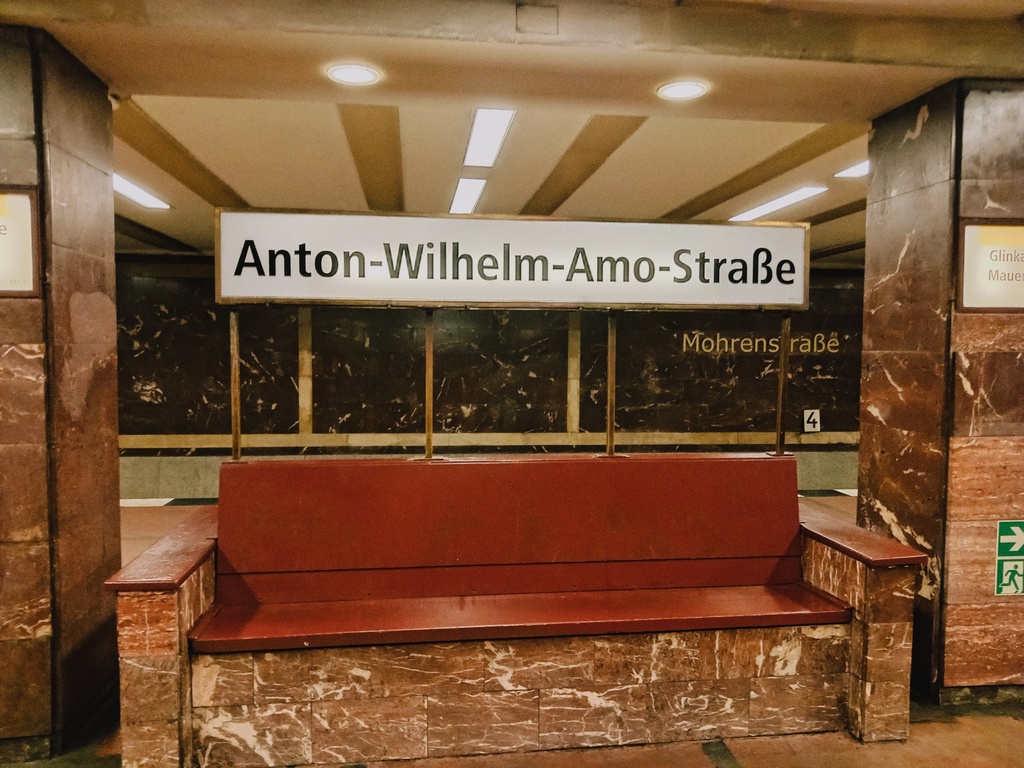
Anton Wilhelm Amo Str. and U-Bahn station, behind: Mohrenstrasse. The name means Mohr = Black skinned people. Irony at best. (c) Remo Kurka, Berlin
Wittenberg: A Beautiful City That Forgot Its African Scholar
From Berlin, I took the train to Wittenberg, where Amo studied in the 1720s. The city is charming, full of Reformation history, Luther, Melanchthon — but almost nobody I spoke to had ever heard of Amo.
Before exploring, I tried to eat at the Kartoffelhaus, but it was completely full. A waitress later told me my backpack was still on a chair inside. So I ended up at the Italian restaurant next door, which turned out to be the quieter choice before continuing my search.
I walked through the old streets, took photos, and asked people about Amo. Blank faces. Shrugs. Polite confusion.
Amo studied here. But Wittenberg has forgotten him.
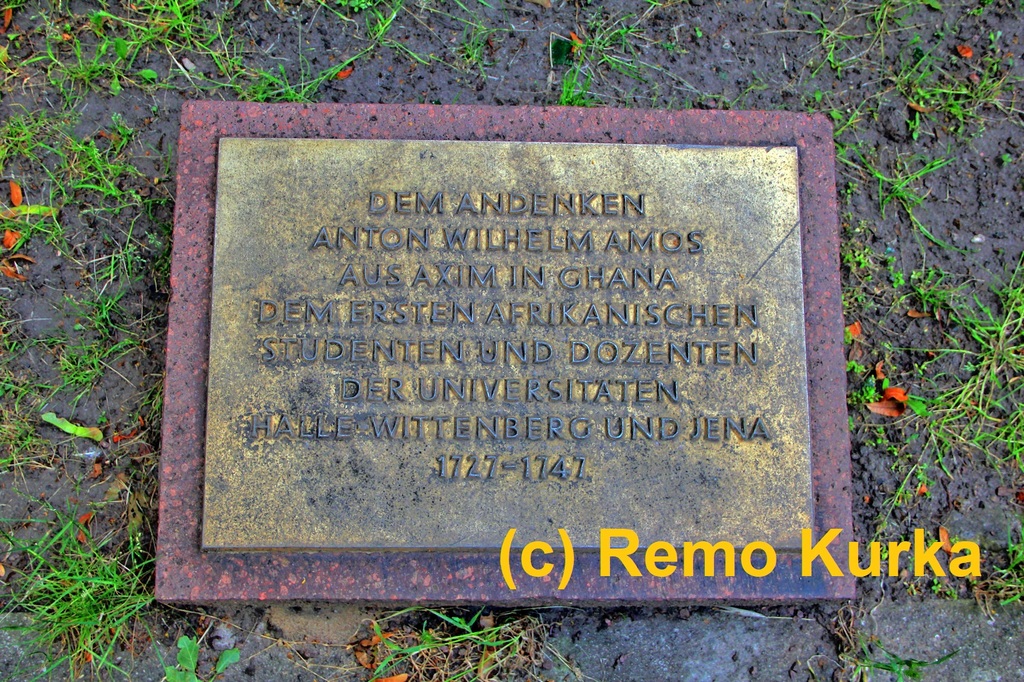
Anton Wilhelm Amo memorial, Halle University, Germany
The Overcrowded Train — And the Unexpected Detour
My next destination was Halle, where Amo earned his doctorate and later taught. But the direct train from Wittenberg was so overcrowded — packed like sardines — that boarding was impossible.
So I improvised:
Wittenberg → Bitterfeld
Bitterfeld → Dessau
Dessau → Halle
Amo himself traveled these regions 300 years ago. I wondered how many detours he had to take — not on trains, but through life.
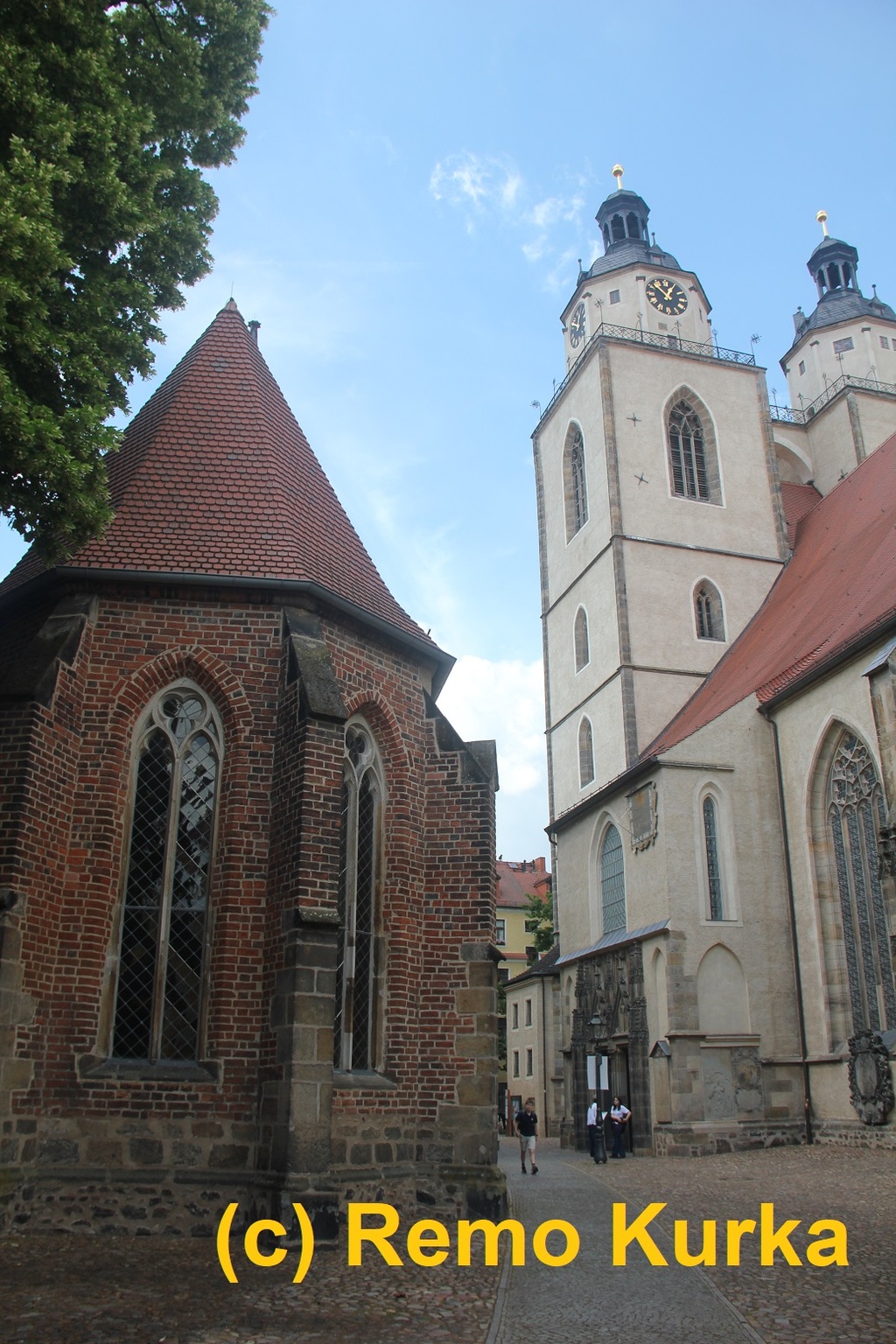
A beautiful small city: Wittenberg, City Church of Martin Luther, Anton Wilhel Amo and Franciscus Africanus (Francis of Guinea) Germany. It is living history!
Halle: Searching for a Monument Nobody Knows
Halle was the most revealing part of the journey.
I asked several people — students, locals, shopkeepers — about the Amo monument.
One young woman knew only that a street had been renamed.
A student recognized the building, but not the man or statues itself.
Most had never heard the name at all.
So I walked across the city, searching for the monument myself. Eventually, I found it — quiet, dignified, almost hidden.
Amo is somehow represented with the "Free Africa" memorial, which stands there in bronze, but unnoticed. A symbol of a man who contributed to German intellectual life, yet remains outside its memory. There are 2 memorial plates, memorizing Anton Wilhelm Amo, just in front.

Bitterfeld, Railway-station, Germany - On the way of finding Anton Wilhelm Amo
The 13‑Hour Return Journey
The way back was a marathon:
Halle → Leipzig Messe
Leipzig Messe → Dessau
Dessau → Berlin Spandau
S‑Bahn
U‑Bahn
Bus
By the time I reached home, the journey had taken 13 hours.
And yet, it felt necessary — because it mirrored Amo’s own struggle for visibility.
Before Amo: The Forgotten African Scholar from Guinea
Most people believe Amo was the first African scholar in Germany. He wasn’t.
Decades before him, a West African man from Guinea, known as Franciscus Africanus, lived and studied in German academic circles in the late 1600s.
He left no published works. He never became a professor. But he was there — an African mind navigating European academia long before Amo.
His story is almost forgotten today. But it deserves to be remembered.
Why Amo Matters — For Ghana, Africa, and the World
Amo’s life is more than a historical curiosity. It is a story of:
African intellectual sovereignty
resilience in the face of racism
the right to think, teach, and exist as an equal
the long African presence in Europe
the early roots of African independence movements
He challenged European philosophy from within. He defended the rights of Africans in Europe. He became a professor at a time when Africans were enslaved across the Atlantic.
His return to Ghana in 1747 was not a retreat. It was a reclaiming.
A Journey Worth Taking
My 13‑hour journey across Germany taught me something simple but powerful:
Amo is not forgotten because he was unimportant.He is forgotten because he was ahead of his time.
And now, slowly, his story is returning — to Germany, to Ghana, to Africa, and to the world.
By remembering Amo, we remember ourselves.
Despite modern claims, there is no evidence that Amo was ever enslaved. All historical records describe him as a member of a princely household and later as a scholar — not as a slave.
Why this matters
This correction restores Amo’s dignity and aligns his story with the long tradition of West African intellectuals who engaged Europe on equal terms.