
The Trans-Atlantic Slave Trade Under British Rule
How the Gold Coast Became a Centre of Human Trafficking
Introduction
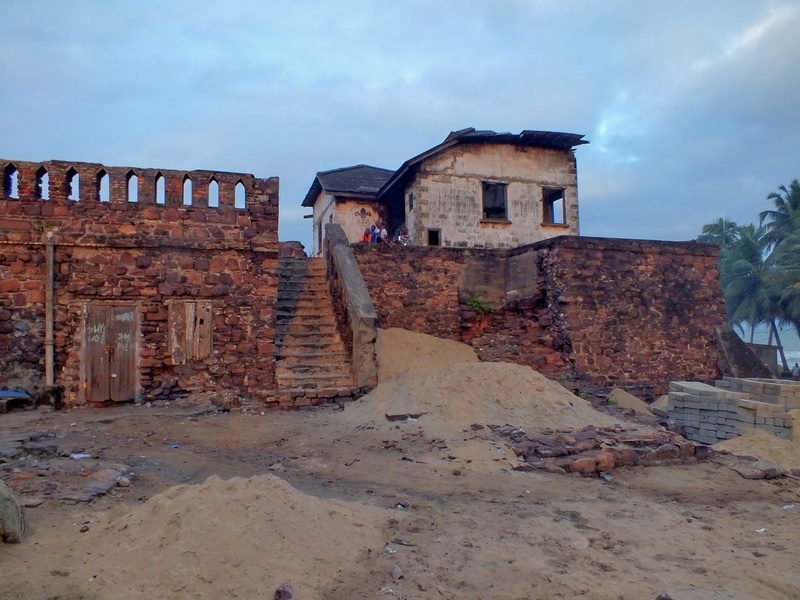
Photo Header: British Fort Komenda. Article by Remo Kurka - Few periods in Ghana's history have left a deeper or more enduring legacy than the trans-Atlantic slave trade. Between the seventeenth and early nineteenth centuries, the Gold Coast became one of the principal centres from which enslaved Africans were transported across the Atlantic Ocean to plantations in the Caribbean, North America, and South America.
Although several European nations—including Portugal, the Netherlands, Denmark, and Sweden—participated in the slave trade, Britain's role expanded dramatically during the eighteenth century. As Britain's colonial empire grew and plantation economies demanded an ever-increasing labour force, British merchants transformed the Gold Coast into one of the most important slave-exporting regions in West Africa.
Behind the wealth generated by this trade lay immense human suffering. Families were torn apart, kingdoms were destabilised, entire communities were depopulated, and millions of lives were forever changed. The consequences continue to shape Ghana, the African diaspora, and the wider Atlantic world today.

Photo Composite of a sailing vessel and Cape Coast Castle, Ghana (c) documented by Remo Kurka
The Gold Coast Before British Dominance
Long before Britain became the dominant European power on the Gold Coast, the region was home to prosperous African kingdoms with sophisticated political systems, thriving economies, and extensive regional trade networks.
Kingdoms such as Denkyira, Akwamu, Fante, and later the powerful Asante Empire controlled trade routes linking the forests of present-day Ghana with inland regions stretching north into what are now Burkina Faso, northern Côte d'Ivoire (Ivory Coast), Togo, Benin, and parts of Niger and the wider Sahel.
Initially, European merchants came primarily in search of gold, ivory, pepper, and other valuable commodities. However, as plantation agriculture expanded in the Americas during the seventeenth century, the demand for enslaved labour grew rapidly, fundamentally changing the nature of Atlantic commerce.
Britain's Expanding Role
Britain's involvement in the slave trade increased significantly after 1700.
The rapid growth of sugar, tobacco, cotton, coffee, and rice plantations throughout Britain's Caribbean colonies and North America created an enormous demand for labour. Plantation owners sought a continuous supply of enslaved workers, and British shipping companies became major participants in the trade.
The Gold Coast emerged as one of Britain's principal sources of enslaved Africans.
British merchants operated from fortified coastal settlements including Cape Coast Castle, Fort James in Accra, and other trading forts where captives were imprisoned before embarking on the Atlantic crossing.
By the eighteenth century, Britain had become the largest slave-trading nation in the Atlantic world.
Where Did the Captives Come From?
One of the most common misconceptions is that all enslaved Africans exported from the Gold Coast came from present-day Ghana.
In reality, many captives originated from a vast inland region connected by centuries-old trade routes.
Men, women, and children were brought from areas that today include:
- Ghana
- Burkina Faso
- Northern Côte d'Ivoire (Ivory Coast)
- Togo
- Benin
- Parts of Niger
- Other regions of the western Sahel
Some had been captured during wars between African states. Others became victims of raids, political conflicts, judicial punishments, debt slavery, or organised slave trading.
They were often transported over hundreds of kilometres, passing through numerous markets before reaching the coast.
By the time many captives arrived at British-controlled forts, they had already endured weeks or months of forced marches under harsh conditions.
The Role of African Kingdoms
The history of the trans-Atlantic slave trade is complex and cannot be understood simply as a conflict between Europeans and Africans.
European merchants generally did not conduct large-scale slave raids deep into the African interior. Instead, they relied on existing African trading networks and negotiated with local rulers, merchants, and political elites.
Some African kingdoms and trading states participated actively in capturing, purchasing, or selling prisoners of war and other captives to European traders. In return, they received goods such as firearms, gunpowder, textiles, metal products, alcohol, beads, and other imported commodities.
However, participation varied greatly across time and place.
Some states became deeply involved in the trade, while others resisted European influence, sought to limit slave trading, or became victims themselves. Political alliances shifted frequently, and many communities suffered devastating losses regardless of whether neighbouring rulers participated in the trade.
Recognising this complexity is essential to understanding the history of the Gold Coast without oversimplifying the responsibilities of the many actors involved.
Britain's Coastal Slave Forts
Once captives reached the coast, they were imprisoned inside Britain's fortified castles before departure.
The most notorious were:
- Cape Coast Castle
- Fort James, Accra
- Fort William at Anomabu
- Other British-controlled forts along the Gold Coast
Inside these fortifications, enslaved Africans were confined in underground dungeons designed to maximise security rather than human welfare.
Men, women, and children were often held separately in overcrowded, dark, poorly ventilated chambers.
Food and water were scarce, sanitation was almost non-existent, disease spread rapidly, and many captives died before ever boarding a ship.
Today, these dungeons remain among the most powerful physical reminders of the slave trade anywhere in the world.
The Middle Passage
After confinement in the coastal forts, captives were forced aboard slave ships bound for the Americas.
This voyage became known as the Middle Passage, one of the deadliest stages of the trans-Atlantic slave trade.
Conditions aboard slave ships were horrific.
Captives were chained together below deck in extremely confined spaces, with little room to move. Poor sanitation, disease, malnutrition, dehydration, and physical abuse were widespread. Mortality rates were high, and countless people died during the crossing.
Those who survived arrived in the Caribbean, Brazil, or North America, where they were sold into slavery and forced to work on plantations producing crops that generated enormous wealth for European empires.
The Triangular Trade
The British slave trade formed part of a much larger commercial system known as the Triangular Trade.
The cycle generally followed three stages:
- British ships carried manufactured goods such as textiles, firearms, metal products, and alcohol to West Africa.
- These goods were exchanged for enslaved Africans through local trading networks.
- Enslaved people were transported across the Atlantic, while plantation products including sugar, cotton, tobacco, coffee, and rum were shipped back to Britain.
This system generated immense profits for merchants, investors, plantation owners, shipping companies, insurers, and governments.
The prosperity of many British ports and industries was closely connected to this commerce.
The Impact on the Gold Coast
The slave trade profoundly transformed societies across the Gold Coast and neighbouring regions.
Entire communities lost large numbers of their population, particularly young adults who would otherwise have contributed to farming, trade, craftsmanship, and leadership.
The trade also:
- Increased warfare between some states.
- Encouraged political instability.
- Expanded the circulation of firearms.
- Altered regional economies.
- Disrupted long-established trade patterns.
- Fragmented families across generations.
Many inland communities lived with the constant threat of raids and capture, while coastal regions became increasingly dependent on European trade.
The demographic consequences were felt across much of West Africa for generations.
The End of Britain's Slave Trade
Growing opposition to slavery emerged in Britain during the late eighteenth century.
Religious leaders, formerly enslaved people, abolitionists, writers, and politicians campaigned for decades against the trade.
Their efforts eventually led to the Slave Trade Act of 1807, which abolished the British trans-Atlantic slave trade.
Importantly, this law ended Britain's participation in transporting enslaved people across the Atlantic but did not abolish slavery itself within the British Empire.
That came later with the Slavery Abolition Act of 1833, which gradually ended slavery throughout most of Britain's colonies.
Although the legal trade ended, illegal slave trading continued in parts of West Africa for several decades.
Legacy and the African Diaspora
The legacy of the trans-Atlantic slave trade extends far beyond Ghana's coastline.
Millions of people throughout the Caribbean, the United States, Canada, Brazil, and Latin America trace part of their ancestry to West Africans who departed through the forts of the Gold Coast.
Today, Ghana has become an important destination for members of the African diaspora seeking to reconnect with their ancestral heritage. Initiatives such as the country's "Year of Return" in 2019, initiated by former president Nana D. Addo, encouraged descendants of enslaved Africans to visit historic sites including Cape Coast Castle and Elmina Castle.
These journeys have strengthened cultural ties between Ghana and communities across the world while encouraging dialogue about history, remembrance, and identity.
Preserving the Memory
Cape Coast Castle, Elmina Castle, and other surviving forts now serve as museums and UNESCO World Heritage Sites.
Visitors can walk through the dungeons where captives were imprisoned, stand before the infamous "Door of No Return," and learn about the experiences of those whose lives were forever changed by slavery.
These monuments are not celebrations of empire. Instead, they are places of education, remembrance, and reflection that honour the resilience of those who endured unimaginable hardship.
Their preservation helps ensure that future generations understand both the scale of the tragedy and the importance of protecting human rights.
Participation of African Rulers
Under British rule, the Gold Coast became one of the principal centres of the trans-Atlantic slave trade. British merchants, working through coastal forts and extensive commercial networks, transported hundreds of thousands of enslaved Africans across the Atlantic to support plantation economies throughout the Americas.
Many of those captives came not only from present-day Ghana but also from regions that are now Burkina Faso, Côte d'Ivoire, Togo, Benin, Niger, and neighbouring parts of West Africa. They reached the coast through complex networks involving warfare, long-distance trade, and the participation of some African rulers and merchants alongside European buyers.
The trans-Atlantic slave trade reshaped societies on both sides of the Atlantic, leaving lasting demographic, economic, and cultural consequences. Today, dome of Ghana's preserved castles and dungeons stand as enduring memorials to this history, reminding the world of the immense human cost of slavery and the importance of remembering the past with honesty and compassion.