
British Forts & Castles in Ghana
The Architecture of Empire Along the Gold Coast
Introduction
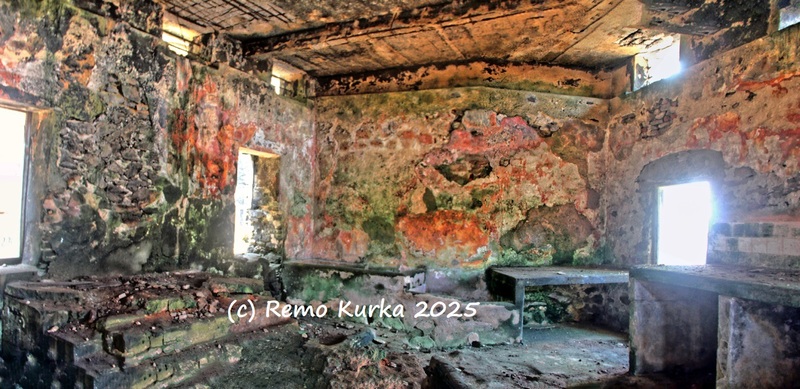
Photo Header: Slave Trading Room inside Fort Anamabo. Article by Remo Kurka - Scattered along Ghana's Atlantic coastline stand some of the most significant historical monuments in Africa. Built over several centuries by competing European powers and later controlled by Britain, these imposing forts and castles were far more than military structures. They served as trading centres, administrative headquarters, defensive strongholds, diplomatic meeting places, and, most tragically, prisons where thousands of enslaved Africans were confined before enduring the horrific Middle Passage across the Atlantic.
Among the best known are Cape Coast Castle and Fort James in Accra, both closely associated with Britain's growing influence on the Gold Coast. Their thick stone walls, towering battlements, underground dungeons, and commanding views of the sea reveal not only impressive military engineering but also the human stories of commerce, conflict, resistance, and unimaginable suffering.
Today, many of these coastal fortifications have been preserved as UNESCO World Heritage Sites, attracting visitors from around the world who come to understand Ghana's central place in the history of European colonialism and the trans-Atlantic slave trade. They stand as enduring reminders of one of history's most complex and painful chapters.
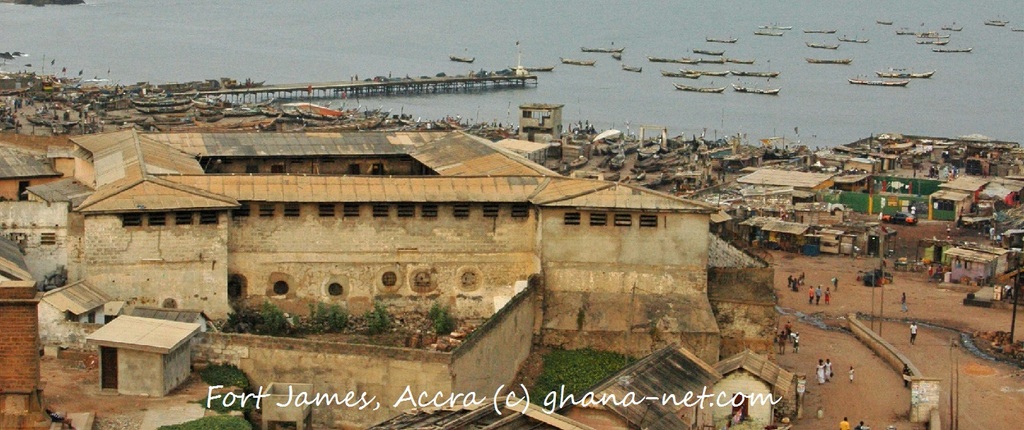
British Fort James at Jamestown, Ghana (c) documented by Remo Kurka
Why Britain Built Forts on the Gold Coast
When British merchants first arrived on the Gold Coast during the sixteenth century, they quickly recognised the strategic importance of establishing permanent bases along the coastline. Initially, trade focused on gold, ivory, spices, and other valuable commodities. As commerce expanded and European rivalry intensified, secure trading posts became increasingly necessary.
The coastline was fiercely contested by Portugal, the Netherlands, Denmark-Norway, Sweden, Brandenburg-Prussia, and Britain. Rather than attempting to conquer the interior, European powers concentrated on controlling coastal trade through heavily fortified settlements.
These forts allowed Britain to:
- Protect valuable cargo from rival European nations.
- Store gold, ivory, textiles, weapons, and imported goods.
- House soldiers, merchants, and colonial officials.
- Negotiate treaties with African rulers.
- Defend important harbours and shipping routes.
- Control expanding commercial networks.
- Support Britain's growing influence throughout West Africa.
As Britain's commercial power increased during the seventeenth and eighteenth centuries, these coastal strongholds became symbols of both economic ambition and imperial authority.
Cape Coast Castle: Britain's Stronghold on the Gold Coast
No British fortification became more important than Cape Coast Castle.
Originally established by Swedish traders in the mid-seventeenth century, the site later passed through Danish and Dutch control before Britain assumed ownership in 1664. Under British administration, Cape Coast Castle evolved into the principal headquarters of British operations on the Gold Coast.
From this imposing fortress, colonial officials coordinated trade, managed diplomatic relations with African states, supervised military activities, and later administered Britain's expanding territorial interests.
The castle's architecture reflected both practicality and power. Massive stone walls overlooked the Atlantic Ocean, while cannons protected the harbour from attack. Inside the complex were warehouses, officers' quarters, administrative offices, kitchens, workshops, chapels, and courtyards.
Yet beneath these impressive structures lay some of the castle's darkest spaces—the underground dungeons where enslaved men, women, and children were imprisoned under appalling conditions before being forced aboard slave ships bound for the Americas.
The infamous "Door of No Return," through which captives passed before boarding ships, has become one of the world's most recognised symbols of the trans-Atlantic slave trade.
Fort James: Protecting British Interests in Accra
Another important British stronghold was Fort James, located in present-day Accra.
Completed during the seventeenth century, Fort James occupied a strategic position overlooking the coast and protected Britain's commercial interests in the growing settlement that would later become Ghana's capital city.
Like many coastal forts, Fort James served multiple purposes simultaneously. It housed soldiers, stored merchandise, defended shipping routes, and functioned as a centre for local administration.
Over time, the fort also became associated with the detention of enslaved Africans awaiting transportation across the Atlantic. During the colonial period, it later served as a prison, a role it continued to fulfil well into the twentieth century.
Although smaller than Cape Coast Castle, Fort James remains an important reminder of Britain's long presence in southern Ghana.
The Architecture of Empire
British forts on the Gold Coast were designed with military efficiency and commercial functionality in mind. Their architecture reflected centuries of European defensive engineering while adapting to local environmental conditions.
Common architectural features included:
Thick Defensive Walls
Heavy stone walls protected occupants against naval bombardment, armed attacks, and tropical weather. Their imposing appearance also projected military strength and authority.
Bastions and Cannon Platforms
Corner bastions provided wide fields of fire, allowing defenders to protect every approach to the fort. Cannons facing the Atlantic deterred rival European fleets while safeguarding merchant vessels.
Courtyards
Large open courtyards formed the heart of each fort, providing space for military drills, loading cargo, conducting trade, and assembling personnel.
Warehouses
Extensive storage rooms held valuable goods awaiting shipment. Gold, ivory, textiles, firearms, alcohol, and other commodities passed through these buildings before being exported or exchanged.
Administrative Offices
Colonial governors, merchants, accountants, military commanders, and customs officials conducted Britain's commercial and political affairs from within the fortified complexes.
Dungeons
Perhaps the most haunting architectural features were the underground dungeons used to imprison enslaved Africans. Designed for confinement, most of these having just very small air-holes, these dark chambers often lacked reasonable ventilation, sanitation, or adequate space. Captives were held for days, weeks, or even months under brutal conditions before embarking on the Middle Passage.
Local Materials and Skilled African Labour
Although inspired by European military architecture, many of the forts were built using locally available materials and the expertise of African craftsmen.
Stone, timber, lime mortar, and other resources were sourced from the surrounding region. African masons, carpenters, labourers, and artisans played essential roles in constructing and maintaining these massive structures.
The resulting buildings reflected a combination of European engineering techniques and local knowledge adapted to the tropical climate. Features such as thick walls, elevated verandas, internal courtyards, and ventilation systems helped improve durability and comfort in West Africa's coastal environment.
The Forts and the Trans-Atlantic Slave Trade
As Britain's involvement in the trans-Atlantic slave trade expanded during the seventeenth and eighteenth centuries, many coastal forts became integral parts of this vast commercial system.
Captured Africans were brought from inland regions, like today Northern regions of today Ghana, Ivory Coast, Togo, Burkina Faso and Niger to coastal holding centres, where they were confined before being loaded onto European ships.
Inside the dungeons, conditions were overcrowded, unsanitary, and inhumane. Families were separated, food and water were limited, disease spread rapidly, and many prisoners died before ever leaving Africa.
Those who survived were forced through the castle gates onto ships crossing the Atlantic Ocean in what became known as the Middle Passage. Millions of Africans were transported under horrific conditions to plantations in the Caribbean and the Americas.
Today, these dungeons remain among the most powerful memorials to the human cost of slavery.
Centres of Colonial Administration
Beyond their role in trade, Britain's forts gradually became centres of political authority.
Governors issued orders, negotiated treaties, collected taxes, settled disputes, and coordinated military operations from these fortified headquarters. As British influence expanded inland during the nineteenth century, the forts became the administrative foundation of colonial government.
Many decisions that shaped the future of the Gold Coast were made within these walls, influencing trade policies, diplomatic relations, military campaigns, and eventually the formal establishment of the British colony.
UNESCO World Heritage Status
In recognition of their exceptional historical significance, the forts and castles of Ghana were collectively inscribed on the UNESCO World Heritage List in 1979.
Around thirty, more or less surviving forts, castles, and trading posts stretch along approximately 500 kilometres of Ghana's coastline. Together they represent one of the largest surviving collections of European trading fortifications anywhere in the world.
UNESCO recognises these monuments not only for their architectural importance but also for their profound connection to global history, including maritime trade, European colonial expansion, and the trans-Atlantic slave trade.
Today they serve as museums, educational centres, memorials, and places of reflection for visitors from Ghana, across Africa, the African diaspora, and the wider world.
Preserving Difficult History
Modern Ghana has embraced the preservation of these historic sites as an important part of national heritage.
Visitors touring Cape Coast Castle, *Fort James (*limited, due to a breakdown of structure), Elmina Castle, and other surviving forts encounter exhibitions that explore both the achievements and tragedies associated with these buildings.
For many members of the African diaspora, visiting these sites is a deeply emotional experience that reconnects them with ancestral history. Educational programmes, guided tours, and commemorative ceremonies encourage dialogue about slavery, colonialism, resilience, and reconciliation.
Rather than celebrating empire, these monuments provide opportunities to confront history honestly while honouring the memory of those whose lives were forever altered by these events.
Legacy of Britain's Coastal Forts
The British forts and castles of Ghana continue to shape historical understanding today.
Architecturally, they represent remarkable examples of seventeenth- and eighteenth-century military engineering adapted to West Africa. Historically, they reveal the interconnected stories of African kingdoms, European commerce, imperial expansion, and the trans-Atlantic slave trade.
Their legacy extends beyond Ghana, touching the histories of Britain, the Caribbean, North America, South America, and countless families whose ancestors passed through these coastal fortifications.
Standing above the Atlantic Ocean, these castles remain enduring witnesses to centuries of trade, power, suffering, resistance, and survival.
A Complex Past
The British forts and castles along Ghana's coast are among the country's most significant historical landmarks. Built to secure trade and project imperial power, they evolved into centres of administration and key locations in the trans-Atlantic slave trade.
Today, sites such as Cape Coast Castle and Fort James invite visitors to engage with a complex past—one that encompasses architectural achievement, commercial ambition, colonial expansion, and profound human tragedy. Their preservation ensures that future generations can learn from history, honour those who suffered, and better understand the events that helped shape modern Ghana and the wider Atlantic world.